A strong bleach smell can make a bathroom feel freshly cleaned. But smell and a whiter surface do not tell you whether soap film, grime and mineral deposits have actually been removed. For a proper bathroom deep clean, the right product and method matter more than how strong a chemical smells.
Our advice: do not rely on plain household bleach as your all-purpose bathroom deep cleaner. It has a role in disinfection, but that is only one part of bathroom care.
Cleaning and disinfecting do different jobs
Cleaning removes dirt and residue. Disinfecting uses an appropriate product to kill germs on a surface. When disinfection is needed, dirt should be removed first so the disinfectant can work effectively.
Some formulated bathroom cleaners containing bleach can both clean and disinfect when used exactly as labelled. That does not mean a bottle of plain bleach is the best choice for every surface or every type of buildup.
Bleach is not a limescale remover
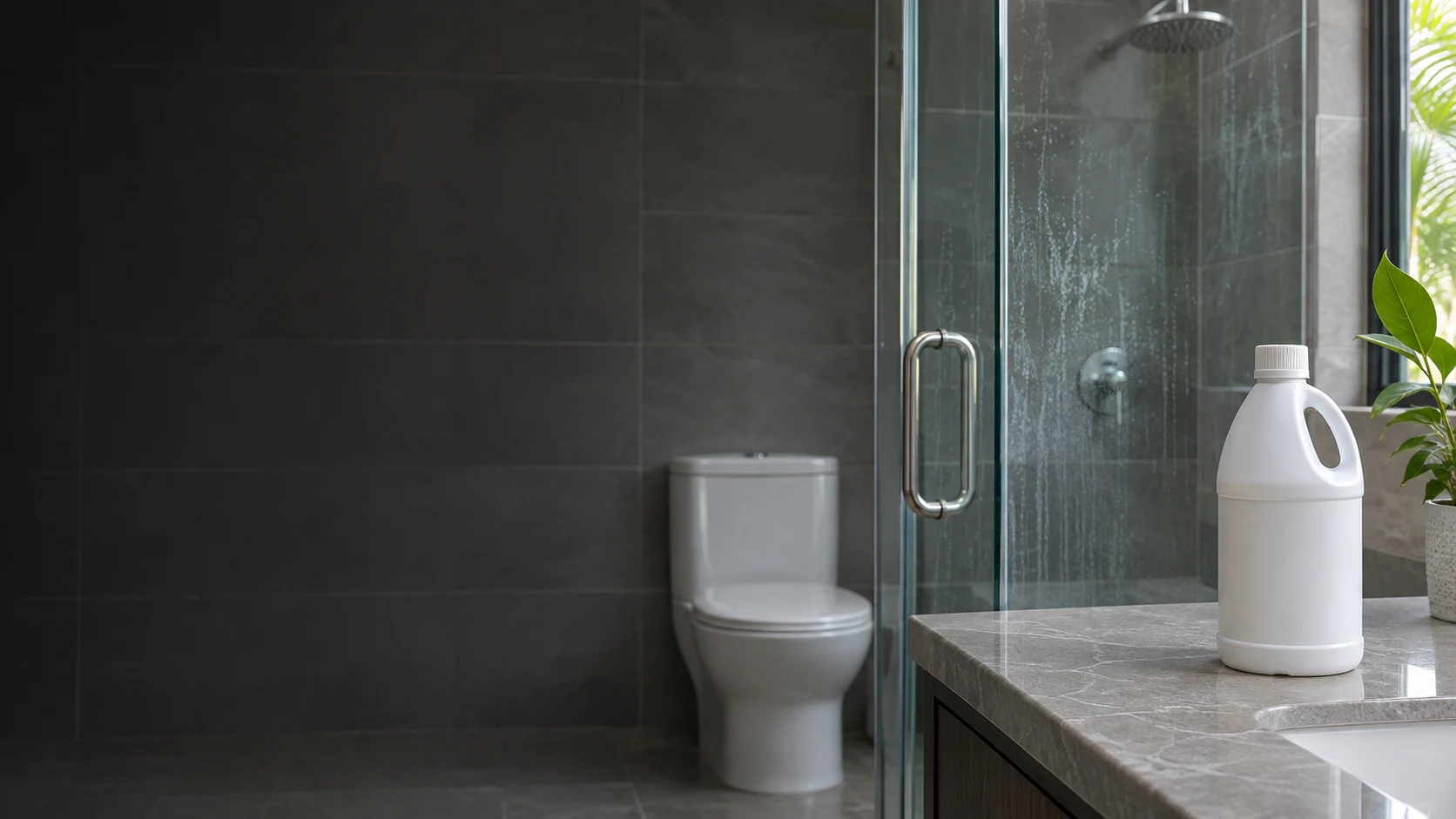
That chalky deposit on your shower glass, taps or toilet bowl may be mineral scale left behind by water. Bleach is not designed to dissolve those deposits. A stain looking lighter does not necessarily mean the underlying buildup is gone.
Soap scum and body oils also need a cleaner designed for that soil, together with suitable agitation and rinsing. Choose a bathroom cleaner or descaler approved for the specific surface. A product suitable for ceramic may be unsuitable for natural stone, metal fittings or a coated shower screen.
One chemical does not suit every bathroom finish
A bathroom brings together several materials: glazed ceramic, grout, sealants, painted seats, chrome and other decorative finishes. Their care requirements differ.
Some manufacturers warn against bleach on particular seats, fittings or finishes. Check both the cleaner label and the fixture manufacturer's instructions. Do not assume that because a product is suitable inside a ceramic toilet bowl, it is suitable for the seat, hinges, taps or surrounding stone.
Never mix bleach with other cleaners
Never combine bleach with vinegar, acidic toilet cleaners, descalers, ammonia or other cleaning products. Dangerous gases can be released. Do not layer products on the same surface or pour one into a toilet bowl containing another.
Use one compatible product at a time. Follow its instructions for removal and rinsing before changing products; if you are unsure what is already present, stop and get advice. Keep the space well ventilated and wear the protection specified on the label. Stronger mixtures are not a shortcut to better results.
A better approach to a bathroom deep clean
Start by identifying each surface and the buildup you need to remove. Use a suitable cleaner, allow its labelled working time, and agitate with a non-scratching tool where appropriate. Rinse as directed and dry surfaces to limit water spotting.
Disinfect when the situation calls for it, such as when someone in the household is ill. Use a disinfectant approved for the surface, follow its dilution instructions and keep the surface wet for the full labelled contact time. For routine home care, consistent cleaning is often sufficient.
A clean bathroom should look cared for, not just smell strong
Deep cleaning means removing the residue that regular wiping leaves behind while caring for the materials underneath. Bleach can be useful in the right circumstances, but it should not replace a complete cleaning process.
For homes and businesses across Trinidad and Tobago, Ahjahmo's Cleaning Services Ltd can assess your washroom surfaces and help plan the right cleaning approach. Beyond Cleaning. Total Facility Care.