A bottle says “apply, allow to dwell, then agitate.” What does that actually mean when you’re standing over a greasy floor or trying to remove a stain? Here’s a plain-English guide to the terms we use at Ahjahmo’s Cleaning Services Ltd, with examples you can put to work.
Before you start
Dilute means to mix a concentrate with water in the amount specified on the label. If the bottle says ready to use, it’s already prepared at the strength intended for use.
Spot-test means to try the product on a small, hidden area first. On a sofa, that could be a concealed section of the same fabric. Let the test area dry and check for a change in colour or texture before treating a larger area.
Pre-treat means to apply a suitable product to a stain or stubborn patch before the main clean. Think of treating a greasy patch beside the stove before cleaning the whole kitchen floor.
Ventilation means bringing fresh air into the space. In a small washroom, that might mean opening a window or running an exhaust fan that vents outdoors. Follow the product’s directions for indoor use.
While you’re cleaning
Saturate means to wet an area thoroughly. How much liquid you use depends on the surface and the instructions. On upholstery, liquid that reaches the cushion filling can be difficult to remove and slow to dry.
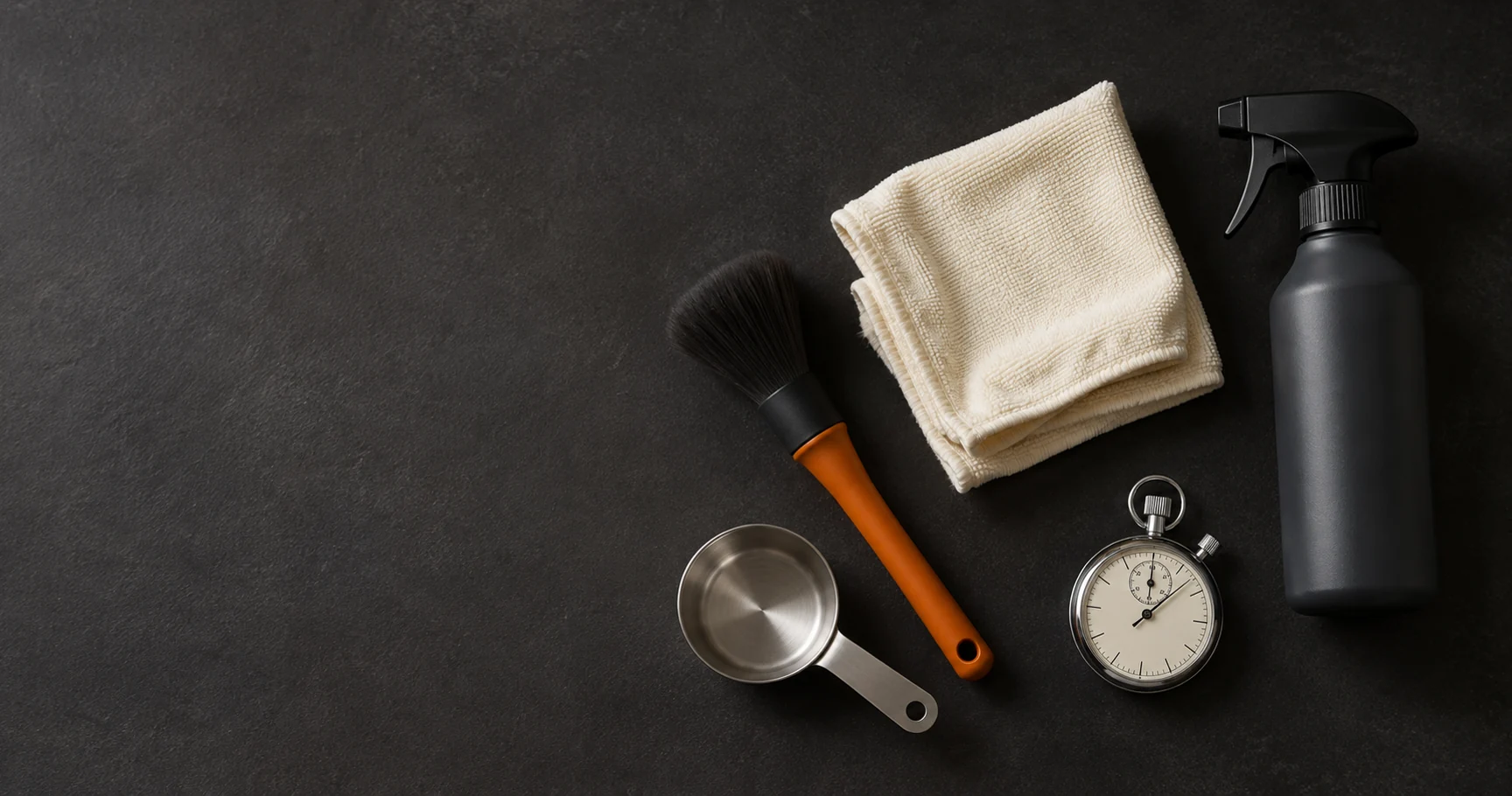
Dwell time is how long you let a cleaner sit on the surface so it can loosen the buildup. If the label gives a dwell time, set a timer before you wipe or scrub.
Agitate means to work the cleaner into the area with movement. That might be a few passes with a soft brush along a grout line or gentle scrubbing with a pad suited to the floor.
Rinse means to remove leftover cleaner and loosened dirt with clean water when the directions call for it. Extract means to use suction to lift dirty liquid out of a carpet or fabric that’s suitable for wet cleaning.
When you’re disinfecting
Contact time is how long a disinfectant must stay wet on the surface to work as directed. If the label calls for five minutes, the surface needs to stay wet for all five. Start by removing visible dirt and check the label for any rinsing instructions.
What it looks like on the job
Take that greasy kitchen floor. We’d choose a product suited to the floor’s finish, pre-treat the worst patches if needed, give the cleaner its directed dwell time, then agitate and remove the loosened grease as instructed. If the floor still feels greasy afterwards, we’d check for leftover residue and reassess the surface before reaching for a stronger product.
Need help with stubborn buildup on tile, grout, carpet or upholstery? Get in touch with Ahjahmo’s Cleaning Services Ltd for professional cleaning and surface care in Trinidad & Tobago.