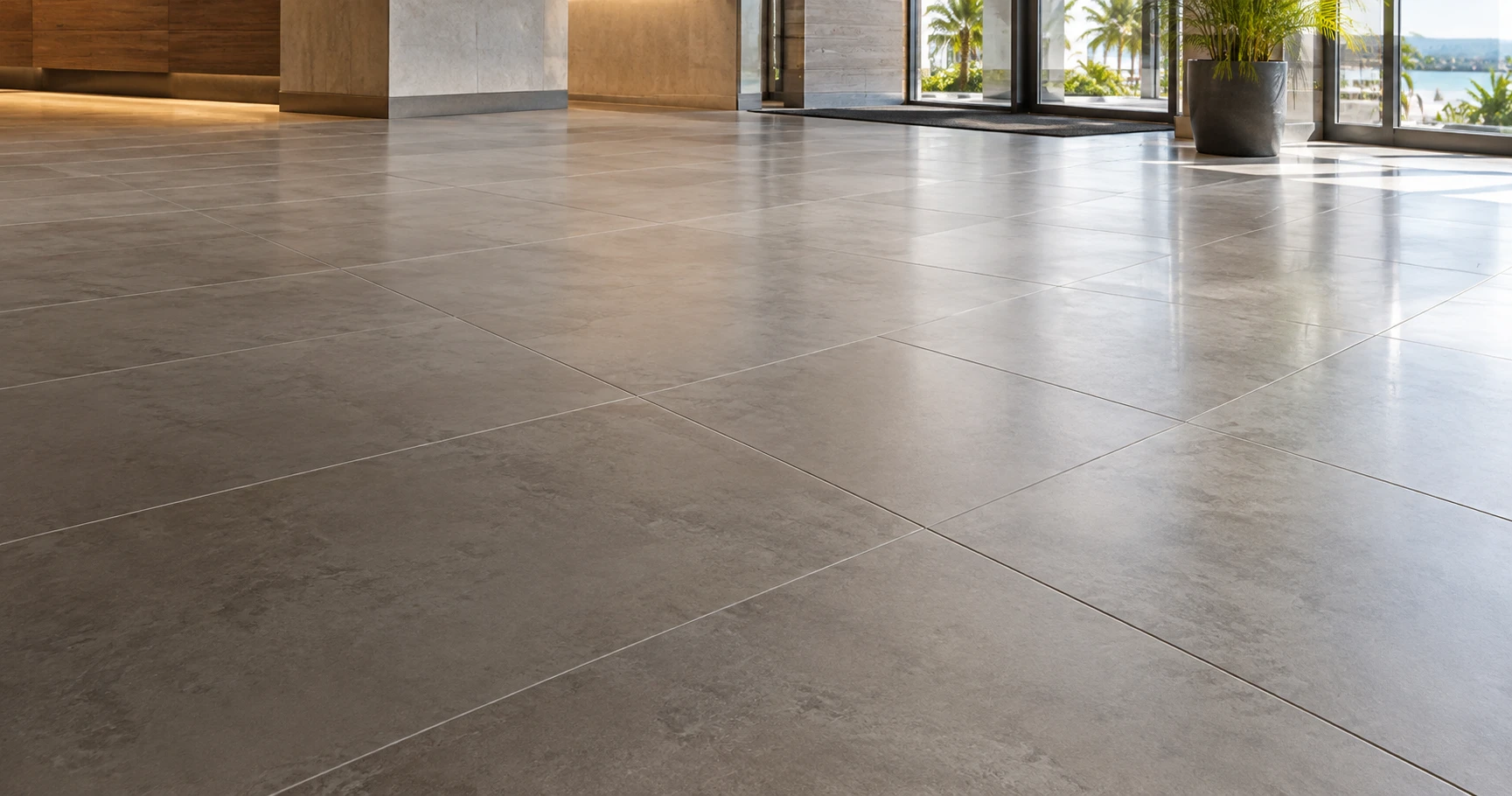
A shiny floor is not always a correctly maintained floor. For most glazed ceramic and porcelain tiles, adding wax, a mop-on polish or a film-forming sealer is unnecessary. Our professional recommendation is to identify the finish and remove the cause of dullness before adding another product.
A surface coating is not the tile’s original finish
Most glazed ceramic tiles have a protective fired surface, while porcelain has a very dense, low-absorption body. These surfaces generally offer little opportunity for a penetrating sealer to enter effectively. It is their low surface porosity—not high porosity—that matters. A polish is designed to form a film on top; it does not absorb into the tile to restore its original finish.
On a surface that does not need sealing, excess or incompatible sealer can remain as residue. Polish or a film-forming sealer may leave haze, streaks, uneven sheen or visible traffic lanes, creating an unnecessary cycle of recoating and stripping. Certain polished porcelain products are an exception because polishing can expose microscopic surface pores; follow the manufacturer’s treatment requirements.
More shine can mean more residue
When a floor looks cloudy, assess detergent residue, soil, grout haze and existing finishes first. Covering that problem can make the appearance less consistent. An added coating can also change the feel and traction of the surface, especially when wet. A glossy appearance is not proof of cleanliness or slip resistance.
Sealers are not all the same
A topical sealer forms a surface film. A penetrating or impregnating sealer is a different treatment, selected for a particular material. Neither should be applied simply to make every tiled floor shine.
There are important exceptions: some polished porcelain products need a manufacturer-approved penetrating treatment. Daltile, for example, recommends one before grouting certain fully polished porcelain products. Grout must be assessed separately: cement-based grout may benefit from sealing, while epoxy grout generally does not require it. Follow the specific tile, grout and treatment instructions rather than a blanket “seal everything” or “never seal anything” rule.
What we recommend instead
Start with the tile manufacturer’s care instructions. Remove loose grit regularly. For most glazed ceramic and porcelain surfaces, a compatible pH-neutral cleaner is a practical routine option. Measure the dilution correctly, use clean equipment, remove dirty solution and rinse where directed. Allow the floor to dry before reopening it to traffic.
If dullness persists, have the surface assessed. Tile, grout, an old coating and construction residue need different approaches. Do not attempt to grind or polish a glaze with aggressive pads, and do not experiment with acids or strong strippers. A professional test area helps establish a compatible cleaning method before treating the whole floor.
Already applied polish or sealer?
Do not keep layering over the problem. Identify the product and check whether removal is appropriate for the tile and adjacent materials. Stripping is a separate, product-specific process; use the manufacturer’s directions and a controlled test area. Cleaning may improve appearance, but it cannot guarantee reversal of permanent surface damage.
Clean the surface. Preserve the finish.
For homes, offices, restaurants and retail spaces across Trinidad & Tobago, the goal is a clean, consistent, maintainable floor—not an unnecessary coating. Ahjahmo’s Cleaning Services Ltd provides tile and grout cleaning and floor-care assessments to help determine the right next step for your space.